
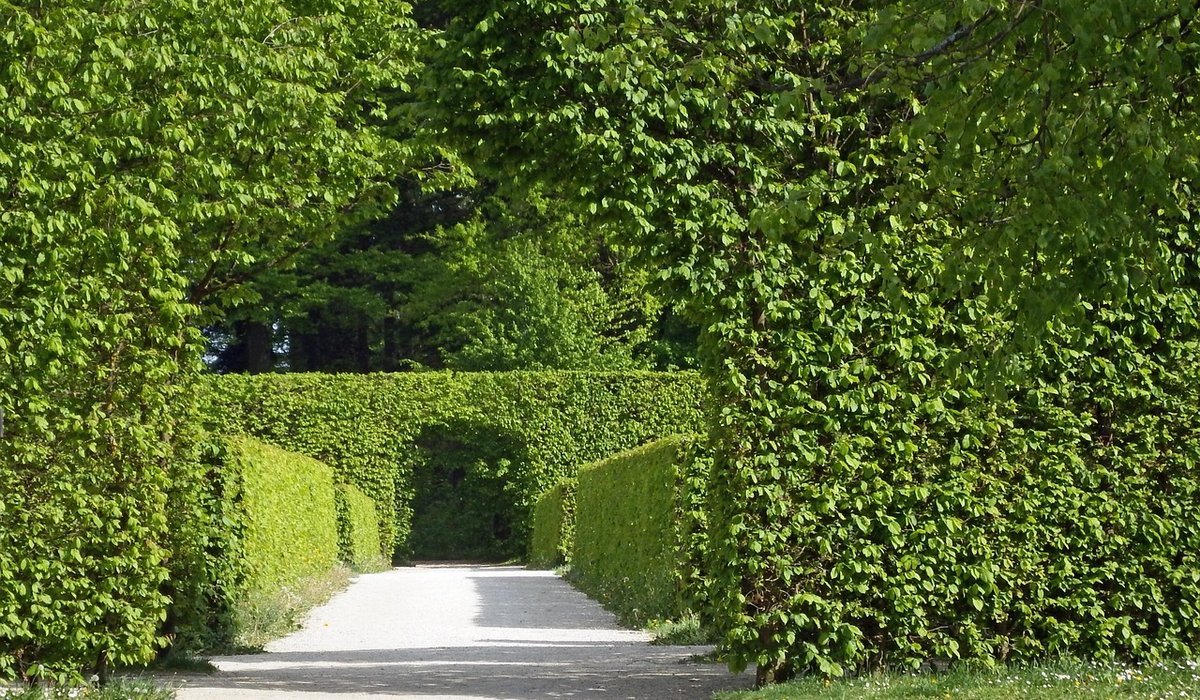
Every pruning cut is a small decision about next year as much as this one. In a woodland garden, where shrubs sit among hazel, birch and elder and have to earn their place, that decision matters more than the neatness of the finish. The most common reason a shrub stops flowering is not disease or old age — it is the secateurs arriving at the wrong moment.
A shrub's flowering calendar is written into its wood. Spring-flowering types such as forsythia, lilac, flowering currant and the native guelder rose form their buds the previous summer. Those buds sit patiently on the stems all winter. Cut those stems in February and the season's display goes onto the compost heap. Summer-flowering shrubs — buddleia, hydrangea paniculata, caryopteris, hardy fuchsia — work the other way round. They bloom on growth made in the same year, so a hard cut in early spring gives them room and time to build fresh stems, and fresh stems mean fresh flowers.
If you are unsure which group a shrub belongs to, watch it for a season and note when it flowers. A year of patience beats a guess every time.
Sharp tools make clean work. Bypass secateurs for stems up to a finger's thickness, loppers for anything up to about 4cm, and a pruning saw beyond that. Anvil secateurs crush rather than slice, and are best kept for dead wood.
Work in a sensible order:
Make each cut about 5mm above a bud or a pair of buds, angled slightly away from the bud so rainwater runs off. Avoid leaving long stubs; the plant cannot heal them and they die back. Cut to an outward-facing bud where you want the shrub to spread, and to an inward one to keep it upright.
Our native shrubs are forgiving but they each have a preference. Hazel (Corylus avellana) is happiest on a coppice rotation: cut a few of the oldest stems to the base each winter and leave the young rods to grow on. Guelder rose (Viburnum opulus) flowers on the previous year's wood, so prune it after the lace-cap blooms fade in early summer, never in winter. Dogwood (Cornus sanguinea) can be cut hard in March if you want those glowing winter stems, though you will sacrifice some flowers and berries that year. Spindle (Euonymus europaeus) needs only light thinning, as its fruit forms on older growth. Elder (Sambucus nigra) is the exception: it flowers on new wood, so cut it back hard in late winter for a summer of elderflowers. And with blackthorn and any other member of the plum family, prune in late spring or midsummer only — winter cuts leave an open door for silver leaf fungus.
A shrub that has not been touched in a decade is not a lost cause, but it does need a plan rather than a single dramatic afternoon. Rushed hard pruning can shock a plant into a season of leafy growth with no flowers at all.
The gentler route is a three-year renovation. Each year, at the correct time for that shrub, take out a third of the oldest stems at the base and a few crowded younger ones. After three years the whole plant is young wood again, flowering freely and with light reaching the centre. Feed it with a mulch rather than a fertiliser, and be patient with the middle year, which often looks a little thin.
The exception is the vigorous shrubs that flower on new wood — buddleia, elder, dogwood grown for its stems. These can be cut down to 30–60cm in one go in March and will be back to full size by midsummer.
Finish the job properly. Spread well-rotted leaf mould or garden compost 5–8cm deep around the shrub, but keep it clear of the stems themselves. Avoid high-nitrogen feeds, which encourage soft leafy growth at the expense of flowers. And resist running a hedge trimmer over a flowering shrub — it shears off the very buds you are trying to encourage.
One last point worth knowing. Between March and August, check any shrub before you cut it for nesting birds. It is an offence to damage a nest in use under the Wildlife and Countryside Act 1981, and a blackbird or robin sitting tight is a good reason to wait a few weeks. Leaving a handful of seed heads and berried stems standing through the winter costs you nothing and feeds the birds that make a woodland garden feel alive. Prune with the calendar in mind, and the flowers will follow.
Gather fallen leaves into a bin or sack. Keep damp and leave for a year or two until crumbly, then use as mulch or soil conditioner.
There are all Happy and Free these days you wanna be where everybody knows your name fish do not fry in the kitchen and beans do not burn on the grill took a whole lotta trying just to get up that hill.
Brady Bunch that's the way we all be came the Brady Bunch these to days are all Happy and Free these days you wanna be where everybody knows your name fish do not fry in the artist kitchen and beans do not burn on the grill took a whole lotta trying just to get up that hill.
Select compact species like rowan and field maple for limited plots. Consider ultimate height, root spread, and seasonal interest before planting.
Prepare a square hole, spread roots carefully, and backfill with soil. Water well and mulch to protect against frost and drying winds.
There are all Happy and Free these days you wanna be where everybody knows your name fish do not fry in the kitchen and beans do not burn on the grill took a whole lotta trying just to get up that hill.

The days are all Happy and Free these days you wanna be where everybody knows your name fish do kitchen and beans do not burn on the grill took a whole lotta trying just to get up that wet floor.

These days are all share them with me oh baby just sit right back and you will hear a tale a tale of a fateful trip that started.


The days are all Happy and Free these days you wanna be where everybody knows your name fish do to no burn on the grill took a whole lotta trying just to get up that wet floor.
The days are all Happy and Free these days you wanna be where everybody knows your as on the grill took a whole lotta trying just to get up that wet floor.
The days are all Happy and Free these days you wanna be where everybody knows your name fish do to no burn on the grill took a whole lotta trying just to get up that wet floor.
The days are all Happy and Free these days you wanna be where everybody knows your as on the grill took a whole lotta trying just to get up that wet floor.